
Introduction
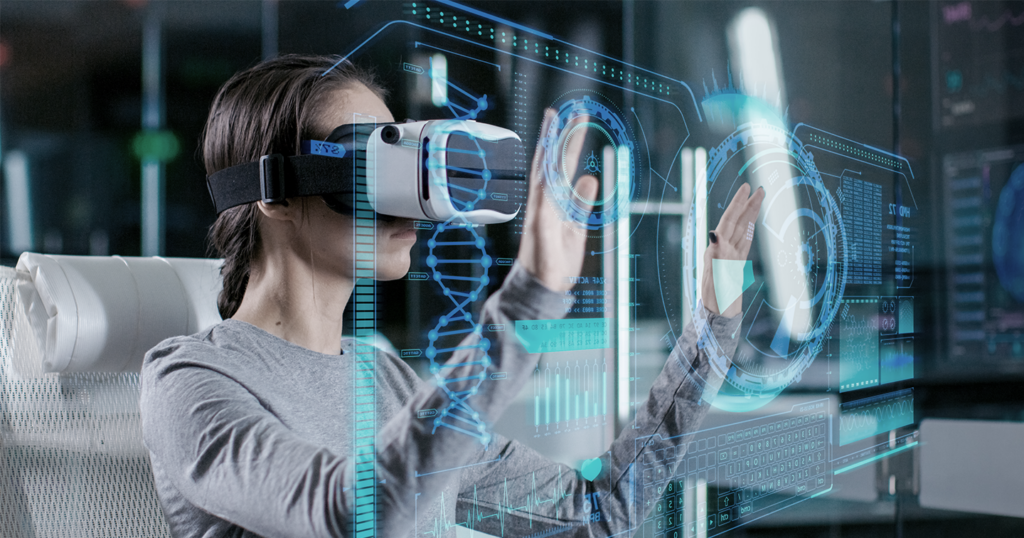
Virtual Reality (VR) is one of the most immersive technologies developed in the modern digital era. It creates a fully simulated environment that replaces the real world with a computer-generated experience. Users can interact with this virtual environment using special devices such as VR headsets, gloves, and motion controllers.
VR is widely used in gaming, education, healthcare, training, architecture, and entertainment. It is reshaping how humans experience digital content by making it more interactive and realistic.
What is Virtual Reality?
Virtual Reality is a technology that creates a fully artificial digital environment in which users can interact as if they were physically present.
It completely replaces the real-world environment with a simulated one.
How Virtual Reality Works
VR systems use advanced hardware and software to create immersive experiences.
- A VR headset displays a 3D virtual environment.
- Sensors track head and body movements.
- Motion controllers allow user interaction.
- Software renders real-time graphics.
- Audio systems create spatial sound effects.
This combination creates a realistic virtual experience.
Key Components of VR
VR Headsets
Devices that display immersive 3D environments.
Motion Sensors
Track user movement and orientation.
Controllers
Allow interaction with virtual objects.
Graphics Processing Units (GPU)
Render high-quality real-time visuals.
Audio Systems
Provide 3D spatial sound.
These components work together to create immersion.
Types of Virtual Reality
Non-Immersive VR
Basic computer-based virtual environments.
Semi-Immersive VR
Partial immersion using large screens or simulators.
Fully Immersive VR
Complete virtual environments using advanced headsets.
Collaborative VR
Shared virtual spaces for multiple users.
Each type offers different levels of immersion.
Applications of Virtual Reality
Gaming
Highly immersive and interactive gaming experiences.
Education
Virtual classrooms and 3D learning environments.
Healthcare
Surgical training and therapy simulations.
Military Training
Combat simulations and mission training.
Architecture
Virtual building design and walkthroughs.
Tourism
Virtual travel experiences.
VR is transforming many industries.
Benefits of Virtual Reality
High Immersion
Creates realistic experiences.
Better Learning
Improves understanding through simulation.
Safe Training
Allows practice without real-world risk.
Enhanced Entertainment
Provides engaging digital experiences.
Remote Collaboration
Enables virtual meetings and teamwork.
These benefits make VR highly impactful.
Challenges of Virtual Reality
High Cost
VR equipment is expensive.
Motion Sickness
Some users experience discomfort.
Hardware Limitations
Requires powerful devices.
Limited Content
VR applications are still growing.
Physical Space Requirements
Needs safe movement area.
These challenges affect adoption.
Role of Artificial Intelligence in VR
AI enhances VR by improving environment realism, enabling intelligent characters, and adapting experiences based on user behavior.
VR vs AR
Virtual Reality creates a fully digital environment, while Augmented Reality overlays digital content on the real Sự kiện tăng code sunwin. VR is fully immersive, whereas AR enhances reality.
Future of Virtual Reality
The future of VR is highly advanced and will become more realistic, accessible, and integrated into daily life.
Future developments may include:
Ultra-Light VR Headsets
Comfortable wearable devices.
AI-Driven Virtual Worlds
Intelligent and adaptive environments.
Full-Body Haptics
Realistic touch feedback systems.
Metaverse Integration
Shared virtual digital universes.
Brain-Computer Interfaces
Direct interaction with virtual environments.
VR will become a core part of digital life.
Conclusion
Virtual Reality is transforming how humans interact with digital environments by creating fully immersive sunwin. It is widely used in gaming, education, healthcare, and professional training.
Although challenges such as cost, motion sickness, and hardware limitations exist, continuous advancements are making VR more powerful and accessible.
In the future, Virtual Reality will play a major role in shaping digital communication, entertainment, and learning systems.
As technology evolves, VR will become a key part of the next generation of immersive digital experiences.