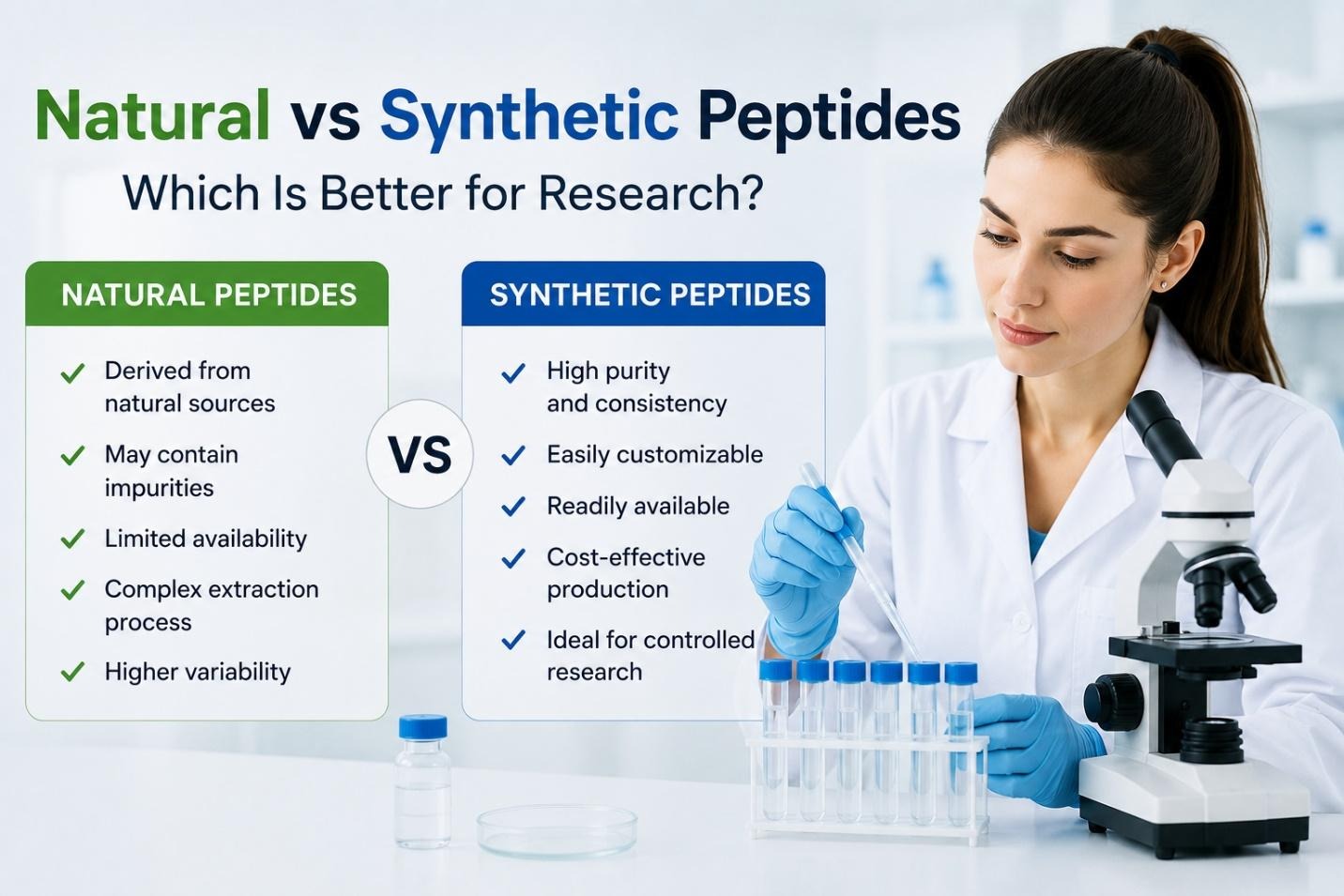

Peptides have become an essential part of modern scientific research. From molecular biology and biotechnology to regenerative medicine and pharmaceutical development, researchers use peptides to better understand biological processes and investigate new scientific possibilities. As peptide research continues to grow, one common question often arises: Are natural peptides or synthetic peptides better for research?
The answer depends largely on the purpose of the study. Both natural and synthetic peptides have important roles in laboratory research, and each offers unique advantages and limitations. Understanding these differences helps researchers choose the most appropriate materials for their scientific investigations. Core Power Peptides supports researchers by providing high-quality synthetic research peptides designed for laboratory and scientific research applications.
In this article, we’ll compare natural and synthetic peptides, explain how they differ, and discuss why synthetic peptides have become the preferred choice for many research laboratories.
What Are Peptides?
Peptides are short chains of amino acids linked together by peptide bonds. They occur naturally in living organisms and participate in many biological functions, including cell communication, hormone regulation, immune responses, and enzyme activity.
Scientists also manufacture peptides in laboratories using advanced synthesis techniques. These laboratory-produced compounds are known as synthetic peptides and are widely used in scientific research because they can be produced with high precision and consistency.
Although natural and synthetic peptides may share the same amino acid sequence, the way they are obtained differs significantly.
What Are Natural Peptides?
Natural peptides are extracted or isolated from biological sources such as plants, animals, microorganisms, or human tissues.
Researchers study natural peptides because they play important roles in many physiological processes. These naturally occurring molecules have helped scientists better understand biological signaling pathways and molecular interactions.
Advantages of Natural Peptides
Natural peptides offer several benefits for research, including:
- Occur naturally within biological systems
- Useful for studying physiological functions
- Help researchers understand natural biological processes
- Provide valuable reference materials for scientific studies
Limitations of Natural Peptides
Despite their importance, natural peptides also present several challenges.
Extraction from biological sources can be complex, time-consuming, and expensive. In addition, naturally sourced peptides may vary in purity or composition depending on their origin.
Other limitations include:
- Limited availability
- Batch-to-batch variation
- More difficult purification
- Potential biological contaminants
- Higher production costs
These factors often make natural peptides less practical for routine laboratory research.
What Are Synthetic Peptides?
Synthetic peptides are manufactured in specialized laboratories using controlled chemical synthesis techniques.
Modern peptide synthesis allows scientists to create peptides with specific amino acid sequences and very high levels of purity. Researchers can also produce synthetic peptides repeatedly with excellent consistency, making them ideal for laboratory experiments.
Today, most research-grade peptides used in scientific laboratories are synthetic.
Advantages of Synthetic Peptides
Synthetic peptides provide numerous benefits that make them attractive for research applications.
High Purity
One of the biggest advantages is purity.
Modern manufacturing technologies allow synthetic peptides to reach purity levels often exceeding 99%, reducing unwanted impurities that could influence laboratory results.
Excellent Batch Consistency
Researchers frequently perform experiments over weeks or months.
Synthetic peptides can be manufactured using standardized production methods that help ensure consistent quality between batches, improving reproducibility.
Reliable Availability
Unlike naturally extracted peptides, synthetic peptides can be produced whenever needed.
This allows laboratories to obtain consistent supplies for long-term research projects.
Custom Design
Scientists can create synthetic peptides with precise amino acid sequences that match specific research objectives.
This flexibility supports studies involving molecular interactions, receptor binding, enzyme activity, and many other scientific applications.
Limitations of Synthetic Peptides
Although synthetic peptides offer many advantages, researchers should also consider certain limitations.
High-quality peptide synthesis requires advanced manufacturing equipment and experienced technicians. Poor manufacturing practices may affect product quality if suppliers do not follow rigorous quality standards.
For this reason, selecting a reputable supplier remains essential.
Comparing Natural and Synthetic Peptides
| Feature | Natural Peptides | Synthetic Peptides |
|---|---|---|
| Source | Biological organisms | Laboratory synthesis |
| Purity | May vary | Typically very high |
| Batch Consistency | Variable | Highly consistent |
| Availability | Limited | Readily available |
| Customization | Limited | Highly customizable |
| Scalability | Difficult | Easily scalable |
| Research Applications | Biological studies | Broad laboratory research |
While both types of peptides contribute to scientific research, synthetic peptides generally provide greater flexibility and consistency for controlled laboratory experiments.
Why Researchers Often Prefer Synthetic Peptides
Most modern laboratories choose synthetic peptides because they offer greater control over experimental conditions.
Researchers benefit from:
- Reliable purity
- Standardized manufacturing
- Consistent experimental materials
- Reduced contamination risks
- Better reproducibility
- Easier procurement
These advantages make synthetic peptides particularly valuable for biotechnology, molecular biology, pharmacology, and peptide chemistry research.
Choosing a Reliable Peptide Supplier
Regardless of whether researchers use natural or synthetic peptides, supplier quality remains critical.
When evaluating research peptide suppliers, laboratories often consider:
- High-purity products
- Transparent quality standards
- Batch consistency
- Third-party testing
- Certificates of Analysis (COAs)
- Professional customer support
- Secure packaging and storage
Working with a supplier committed to quality helps researchers obtain dependable materials for scientific investigations.
The Future of Peptide Research
As peptide science continues advancing, synthetic peptide technology is expected to become even more sophisticated.
Improvements in peptide synthesis, purification methods, automation, and analytical testing are allowing manufacturers to produce increasingly precise research materials.
At the same time, researchers continue studying naturally occurring peptides to better understand biological systems and discover new scientific opportunities.
Rather than competing with one another, natural and synthetic peptides complement each other by contributing valuable knowledge across different areas of scientific research.
Conclusion
Natural and synthetic peptides each play important roles in advancing scientific knowledge. Natural peptides help researchers understand biological systems as they occur in nature, while synthetic peptides provide the consistency, purity, and flexibility needed for controlled laboratory studies.
For many modern research applications, synthetic peptides have become the preferred option because they offer reliable quality, reproducibility, and customization. However, both types remain valuable tools that support scientific discovery across biotechnology, molecular biology, regenerative medicine, and pharmaceutical research.
By understanding the strengths and limitations of each, researchers can make informed decisions and select the most appropriate peptide materials for their specific laboratory objectives.
Disclaimer: Research peptides are intended for laboratory research purposes only. They are not intended for human consumption, veterinary use, diagnosis, treatment, cure, or prevention of any disease. All research should be conducted by qualified professionals in accordance with applicable laws, regulations, and laboratory safety standards.